Why Businesses Get Stuck
Most disruption happens when changes are made all at once. Teams become overwhelmed, processes break down, and productivity drops.
This is why system improvement should always be intentional and phased.

Most disruption happens when changes are made all at once. Teams become overwhelmed, processes break down, and productivity drops.
This is why system improvement should always be intentional and phased.
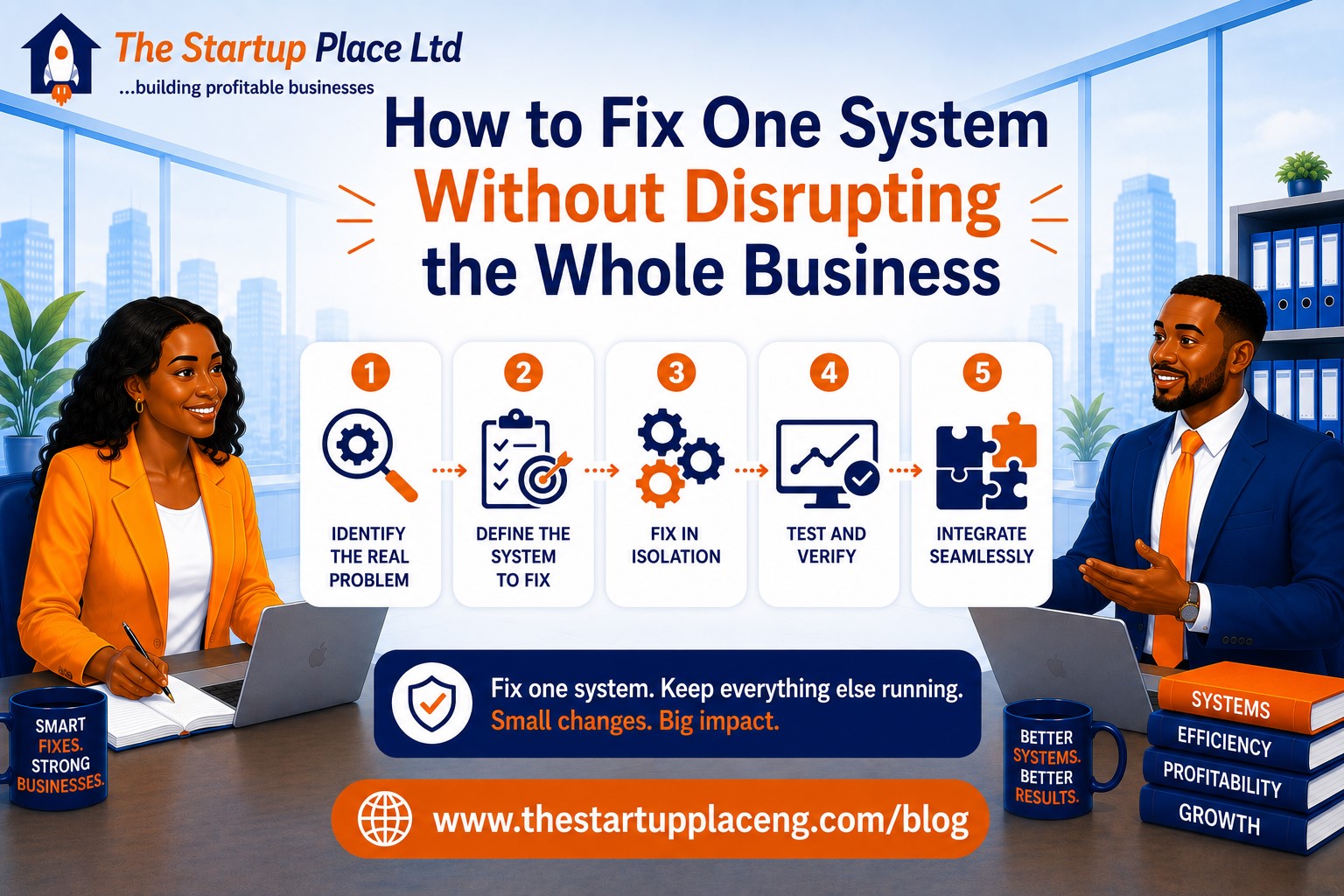
Start by choosing the system causing the most friction. This could be sales follow-up, customer onboarding, operations, or financial tracking.
Focus on impact, not convenience.
Before making any changes, clearly outline how the system currently works. This helps you understand where inefficiencies exist.
Instead of changing everything, improve one step at a time. For example, simplify approval processes or standardize communication.
Run the improved system in a small segment of the business before rolling it out fully. This reduces risk and allows adjustments.
Ensure your team understands the new process before full implementation. Clarity reduces resistance and errors.
Small, consistent improvements are more powerful than large, disruptive changes.
When systems are improved gradually, businesses remain stable while becoming more efficient.
Fixing your business does not require disruption. It requires precision.
At The StartUp Place Ltd., we help businesses identify weak systems, implement structured improvements, and build operations that run smoothly without chaos.
If you want to strengthen your systems without slowing your business down, you can book a strategy session with our team.
The StartUp Place Ltd.,
Helping Businesses Move From Hustle To Structure