
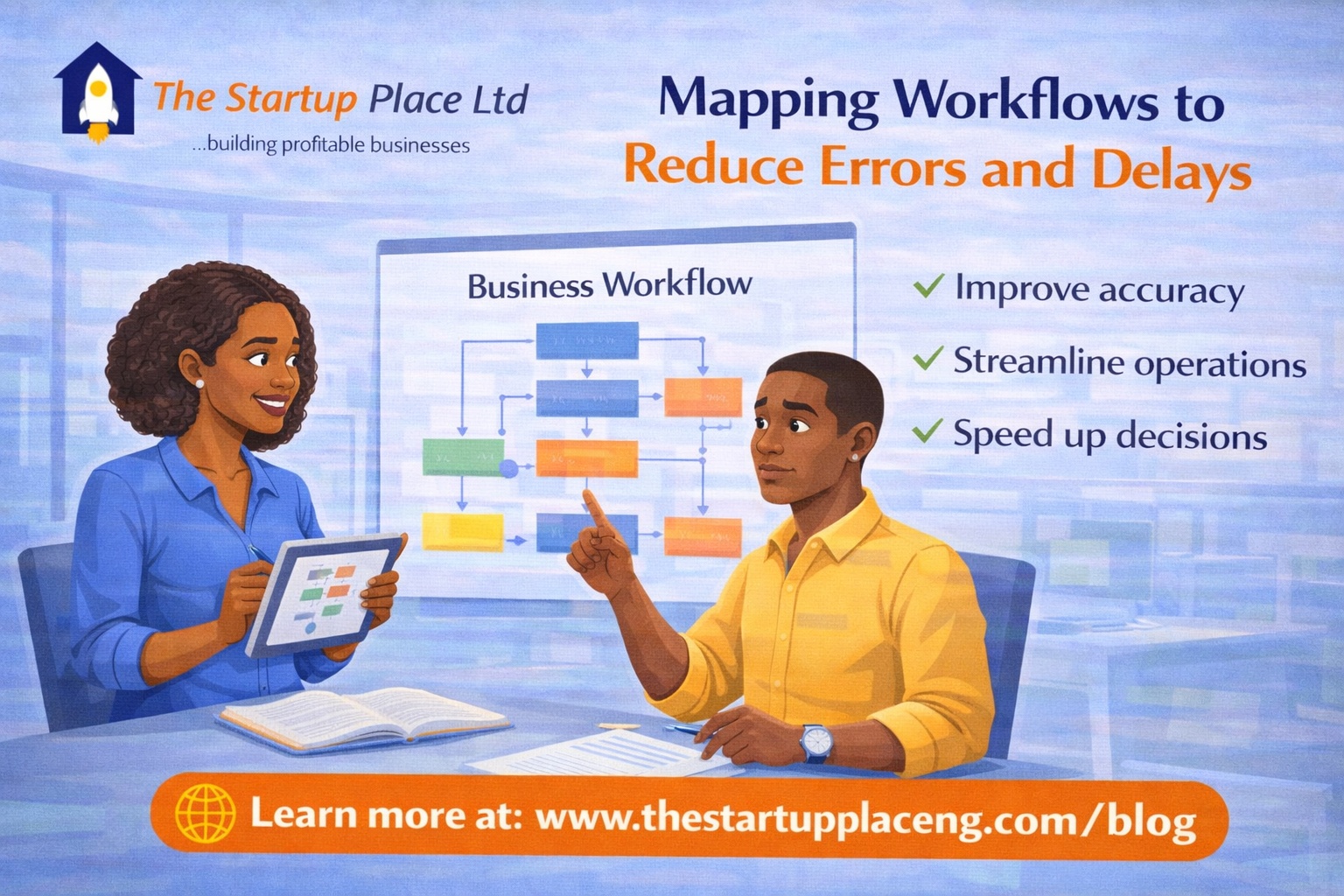
What a Workflow Really Is
A workflow is simply the step-by-step path a task follows from start to finish.
For example:
A customer places an order → it is confirmed → processed → delivered → feedback is collected.
If any of these steps are unclear, delayed, or dependent on memory, problems begin to show up.
Workflow mapping helps you make this entire journey visible.
Why Most Businesses Struggle Without Workflow Mapping
When workflows are not clearly defined, businesses often experience:
- Tasks sitting idle because no one knows the next step
- Team members working in isolation without coordination
- Repeated errors due to inconsistent processes
- Slow delivery times caused by confusion or back-and-forth communication
What looks like “too much work” is often just “unclear flow of work.”